Computational Pathology Products for Cancer Diagnosis
Histopathology interpretation is expert-driven, time-intensive, and difficult to scale. Tsebix addresses this by developing a suite of AI-based tools that assist pathologists in analysing tissue images, from pan-cancer screening to organ-specific subtyping and biomarker prediction.
- Calibrated cancer risk score
- Cloud-based analysis
- Whole-slide image support
- Microscope image compatibility
- Interpretable heatmaps
- AI-assisted morphological description
Clinical Context
Pathology sits at the center of cancer care, yet many regions face delays, diagnostic variability, and limited access to specialist expertise. This gap is widening as global cancer incidence continues to rise.
Rising Demand
Global cancer incidence is increasing, placing growing pressure on diagnostic systems and pathology services.
The Expertise Gap
Many healthcare systems face a shortage of trained pathologists, contributing to delays in critical diagnostic workflows.
Universal Access
Digital pathology infrastructure varies widely across institutions. Some rely on high-end slide scanners, while others operate with standard optical microscopes and digital cameras.
Tsebix is developing computational tools that help pathologists analyze histopathology images more efficiently across different workflows, settings, and resource levels. The goal is not to replace clinical expertise, but to augment it where it is most needed.
Our work prioritizes reliability, accessibility, and trust.
Platform
TS-PScan — Pan-Cancer Screening Tool
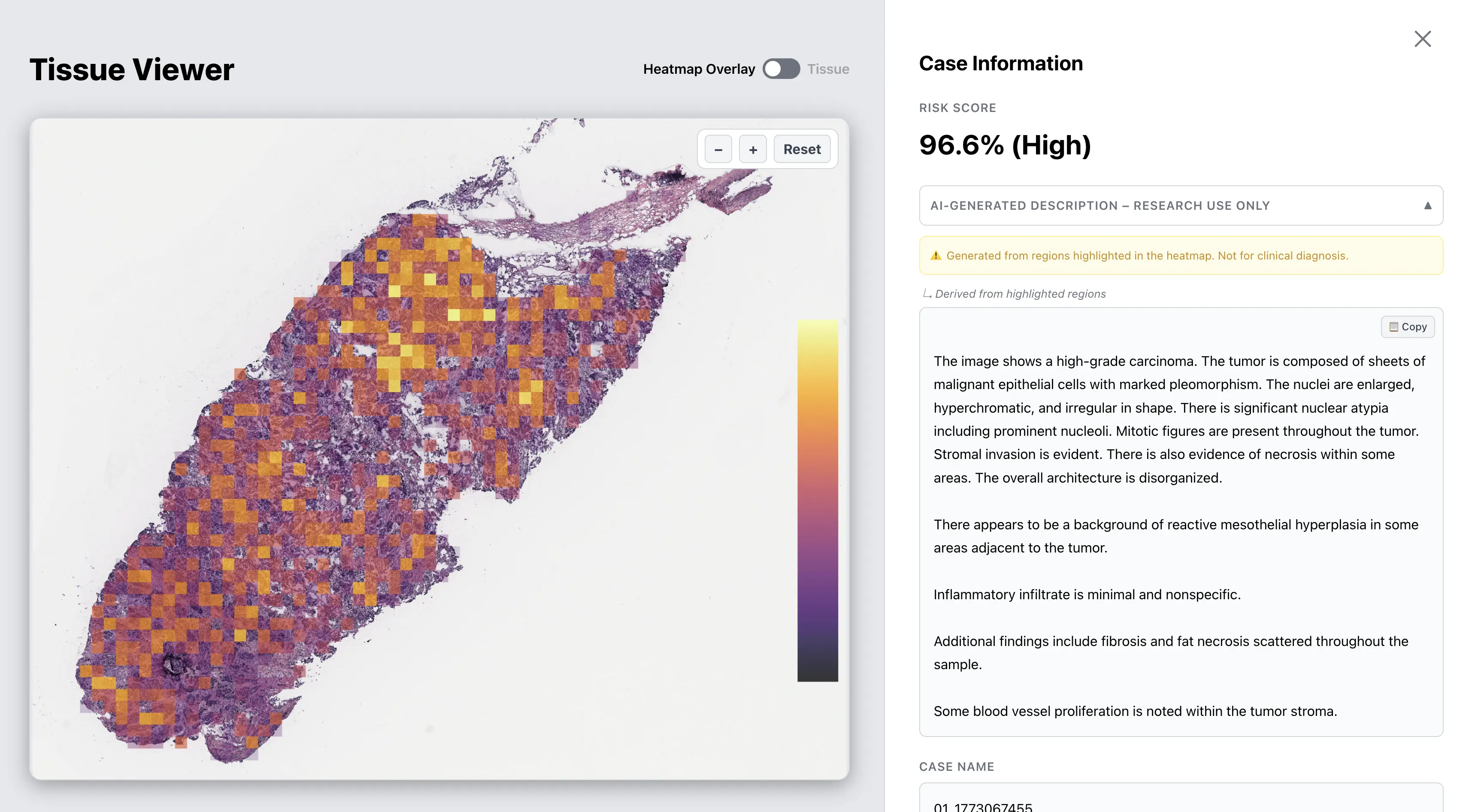
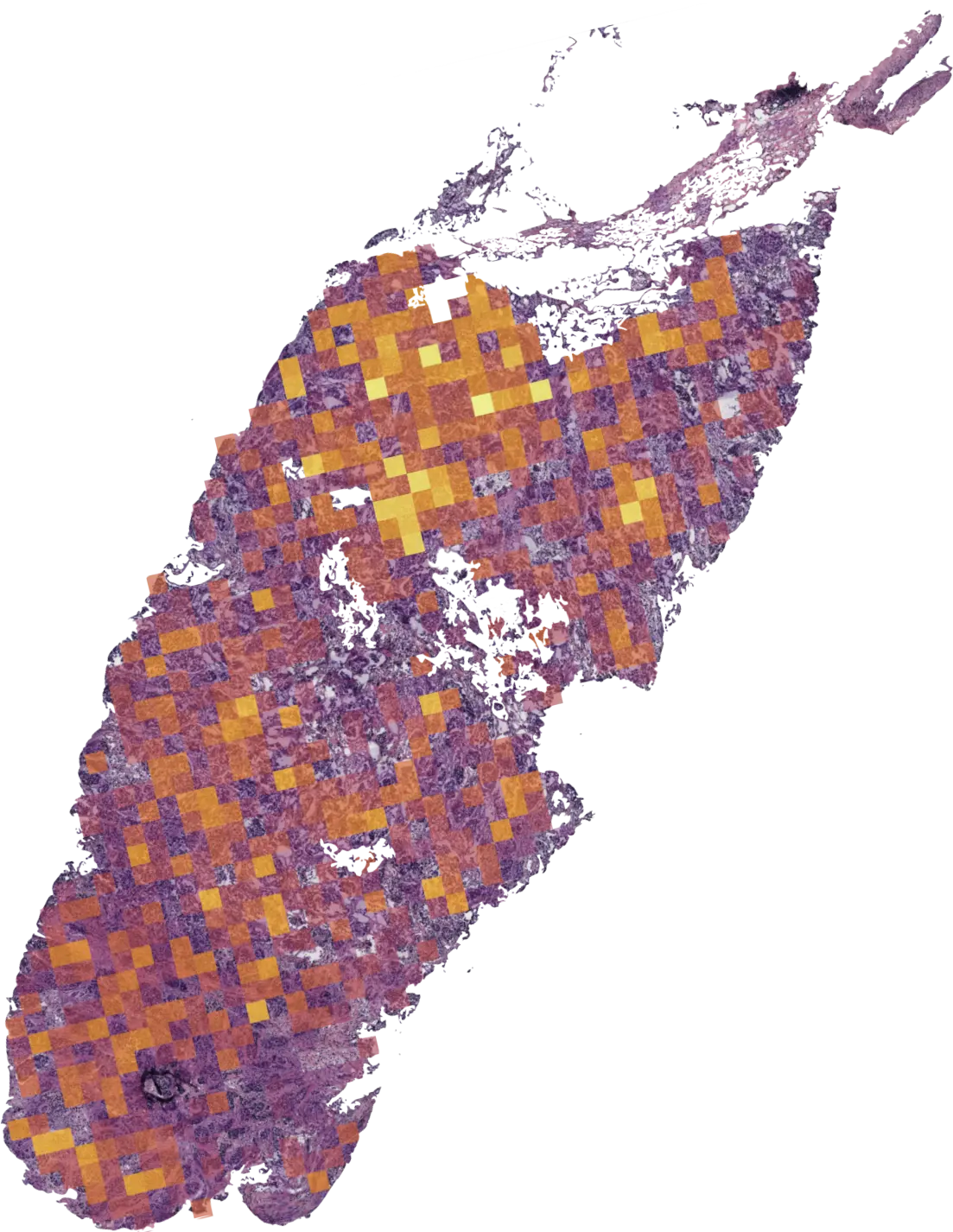
TS-PScan is Tsebix's pan-cancer detection tool for histopathology. It processes Whole Slide Images (WSI) of H&E-stained tissue and returns a cancer/normal classification across 11 cancer types, together with a calibrated risk score, an attention heatmap highlighting regions of interest, and an AI-assisted morphological description.
Current validated cancer types: breast (BRCA), colorectal (COAD), head and neck (HNSC), kidney clear cell (KIRC), lung adenocarcinoma (LUAD), lung squamous cell (LUSC), ovarian (OV), endometrial (UCEC), gastric (STAD), pancreatic (PAAD), and prostate (PRAD).
Performance on independent test set (CPTAC): AUC 0.97, sensitivity 0.95, specificity 0.93, accuracy 0.94.
TS-PScan is designed as a triage tool — a first-pass screening layer that can be applied across tissue types before organ-specific analysis. It is intended to support, not replace, pathologist review.
Platform interface — showing analysis results for a sample histopathology case. Data shown is from a public research dataset.
Coming soon — organ-specific products
Tsebix is developing a suite of organ-specific models that go beyond cancer detection to provide subtyping, grading, and biomarker prediction from H&E WSI. The first product in this suite, TS-Breast, is currently in development and will include histological subtype classification, Nottingham grading, and prediction of ER, PR, and HER2 status.
Further organ-specific products are planned. Details will be published as development progresses.
Technology
Whole-slide histopathology images contain billions of pixels, while diagnostic labels are typically available only at the slide level. The Tsebix pipeline analyzes these large images to identify regions most relevant to the model’s prediction without requiring pixel-level annotations. This approach enables efficient analysis of large tissue images while producing calibrated probability estimates and spatial heatmaps that help guide interpretation.
Image Representation Models
Foundation models used to encode histopathology image features.
Attention-Based Learning
Models designed to identify relevant regions within large tissue images.
Calibration
Methods used to ensure that model outputs correspond to reliable probability estimates.
Multimodal Models
Vision-language models used to generate descriptive summaries of image regions.
Infrastructure
Cloud-based architecture allowing large-image processing through a browser interface.
TS-PScan — Validation
Training & Evaluation
Models were trained using The Cancer Genome Atlas (TCGA) and evaluated on independent data from the Clinical Proteomic Tumor Analysis Consortium (CPTAC). The current pan-cancer model is evaluated on a binary classification task (cancer vs. normal tissue) across multiple cancer types.
Tissue Types
Evaluated across 11 cancer types:
- Breast
- Lung Adenocarcinoma
- Lung Squamous Cell
- Colorectal
- Kidney Clear Cell
- Ovarian
- Head and Neck
- Endometrial
- Gastric
- Pancreatic
- Prostate
Performance Summary
Validation data for organ-specific products (TS-Breast and others) will be published separately as development progresses.
Research
Tsebix focuses on computational pathology methods for cancer analysis, including interpretable AI models and multimodal medical AI.
Current Work
Our ongoing efforts are focused on:
- Expansion of model validation with clinical collaborators
- Evaluation with practicing pathologists in real workflows
- Extension of the platform to additional cancer tissue types
- Continued refinement of computational pathology models
- Development of models exploring the prediction of molecular biomarkers from histopathology images
Vision
Tsebix aims to develop reliable computational tools that assist pathologists in the analysis of
histopathology images and expand access to advanced digital pathology technologies.
The platform is designed to augment clinical expertise rather than replace it.
Team
Jaime F. Delgado Saa, Ph.D. — Founder
Jaime holds a Ph.D. in Electronics Engineering and conducted postdoctoral research at the University of Geneva, Faculty of Medicine, where his work focused on machine learning, probabilistic graphical models, and the analysis of biological signals. He founded Tsebix to apply rigorous computational methods to histopathology, with the goal of building tools that function reliably in real clinical settings.
LinkedInPricing
Tsebix is currently available to research collaborators and clinical institutions under a Research Use Only agreement. Commercial pricing for institutional access will be published ahead of general availability.
Institutions interested in early access, research collaboration, or pricing information are welcome to contact us directly.
Frequently Asked Questions
Is Tsebix intended for clinical diagnosis?
The platform is currently intended for research and evaluation purposes. Model outputs require expert interpretation and are not intended for clinical decision-making.
What image formats are supported?
The platform supports standard digital pathology whole-slide image formats as well as microscope images captured using optical microscopes and digital cameras.
What data were used to train and evaluate the models?
Models were trained using data from The Cancer Genome Atlas (TCGA) and evaluated on independent datasets from the Clinical Proteomic Tumor Analysis Consortium (CPTAC).
Who can request access to the platform?
Access is currently available to academic researchers and clinical collaborators interested in evaluating computational pathology tools.
What types of cancer are currently supported?
Current models have been evaluated across multiple tissue types including breast, lung, colorectal, renal, ovarian, head and neck, and endometrial cancers.